
Invisalign Everyday: Cleaning, Wearing, and Retainer Tips
October 8, 2026 9:00 amTaking your Invisalign trays out for lunch is easy; remembering them when lunch turns into an hour of errands takes a little more effort. Between coffee, snacks, and a busy workday, the trays may be out longer than you realized. A few repeatable habits help you keep the trays clean and in place without making every meal feel like a project.
At Edgewood Family Dentistry in Anderson, Indiana, Dr. Mallory Kuiper follows the tooth movement and sets the schedule for tray changes. At home, Invisalign everyday care includes enough wear time, clean teeth beneath the trays, and a case that is easy to find at meals. If one step keeps going wrong, we can help you change that part of the routine instead of asking you to overhaul the whole day.
Keep Wear Time Consistent
We generally ask you to wear Invisalign for 20 to 22 hours a day, and we’ll give you the schedule for your treatment. That means the trays stay in during sleep and most waking hours. Removing them for several meals, snacks, and a long coffee break can add up faster than expected.
If you tend to forget the trays after a meal, putting the case beside your toothbrush or setting a reminder may help. The aligners need enough time against the teeth to apply the planned pressure. After repeated missed hours, we may need to change the schedule, so check with our team before moving to the next set.
Change trays on the schedule we give you, since each set builds on the movement from the previous one. If you switch early, the next set may not fit; a gap that stays between a tooth and the tray can also mean that tooth has fallen behind. We check those gaps during progress visits and adjust the tray schedule if needed.
Take Trays Out for Food and Drinks Other Than Water
Take the trays out before eating or drinking anything other than plain water. Food can stain or damage them, and sugary or acidic drinks can flow beneath the plastic and stay against the teeth. Water is the simplest drink to keep nearby while the aligners are in.
Remove aligners for hot drinks as well, since heat can distort the plastic. Even unsweetened coffee or tea can change a tray’s shape if you drink it with the aligners in. Afterward, clean your teeth and replace the trays so a long coffee break does not turn into hours of missed wear.
After eating, clean your teeth before putting the trays back in. If you are out without a toothbrush, rinse your mouth and the aligners with water, then brush as soon as you can. Doing that occasionally is different from putting trays over food throughout the day, which holds sugary residue against the teeth and can increase cavity risk.
Clean the Aligners Without Damaging Them
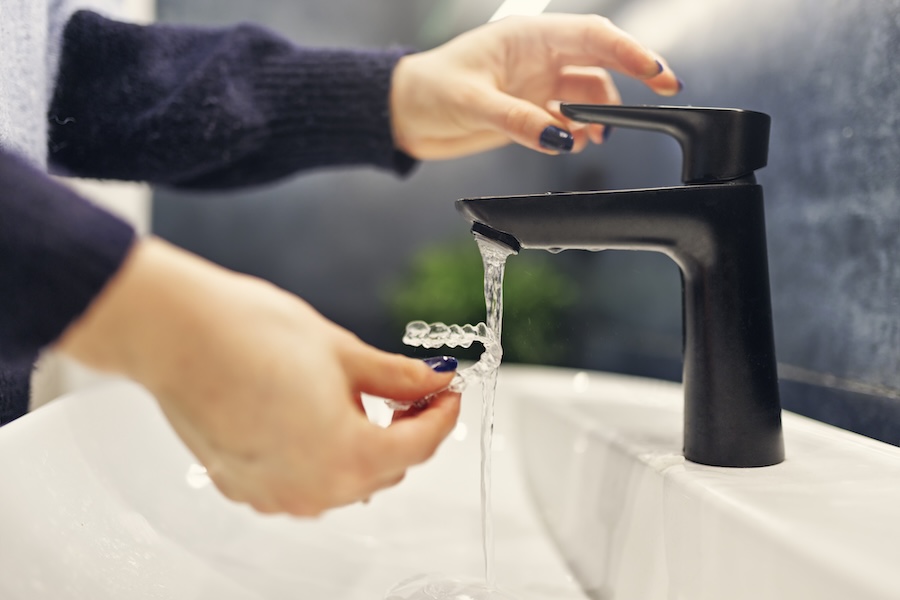
Rinse aligners when you remove them, then use the cleaning method we show you for that set. A soft brush and an aligner cleaner we recommend can remove the buildup without scratching the plastic. Keep them away from hot water and harsh chemicals, which can change their shape or damage the surface.
Wash the case as well, since residue from the trays can collect inside it. Let it dry so the aligners do not go back into a dirty, damp container. Keeping the case where you eat also makes it easier to use instead of wrapping the trays in a napkin.
It is easy to wrap trays in a napkin during lunch and forget them when the table is cleared. Put them straight into their case instead, so they stay protected and you can find them after eating. At home, keep the closed case out of pets’ reach—a chewed aligner needs replacing even if it was your newest set.
Keep Cleaning Between the Teeth
Along with cleaning the trays, keep brushing twice daily with fluoride toothpaste and cleaning between teeth each day. Small tooth-colored attachments create extra edges to clean, even though the trays come out. Run the brush gently around those edges and the gumline so plaque does not stay there throughout treatment.
Removing the aligners gives you access for brushing and flossing, although crowded teeth may still be difficult to reach at first. Ease floss through tight contacts and clean along each side of the tooth instead of snapping it down against the gum. As the teeth move, we can help you adjust the technique for spaces that open or contacts that change.
Keep your regular dental exams and cleanings during Invisalign treatment. As the teeth move, we still check for decay and gum inflammation and help you reach any difficult areas. Swelling or repeated bleeding still needs examination during treatment, since cleaning changes or gum therapy may be needed.
Pay Attention to How Each Tray Fits
Even with consistent wear and cleaning, a new set may feel snug as it starts working on the next movement. The tray should still seat over the teeth and attachments as we showed you. If it rocks, leaves a large gap that stays, or causes increasing pain, call us so we can check the fit.
An attachment gives the tray a grip for a planned tooth movement, so it can affect progress if the small piece comes off. The tooth may stop following that part of the tray even when you keep wearing it. Dr. Kuiper can determine whether the attachment needs replacing before the next tray change or at your scheduled visit.
If a tray breaks or disappears, call us and let us know which set you were wearing. Keep the previous trays available, since we may ask you to wear one until we can replace the lost set or check progress. We will explain what to wear so you are not left without an aligner while waiting for the appointment.
Retainers Begin When Active Movement Ends
Once those movements are complete, you can stop changing to new trays and begin wearing retainers to hold the result. Teeth continue to move over time, including a natural tendency to drift toward the front of the mouth, so long-term retention helps keep the alignment you achieved. We will explain the initial wear schedule and when to move to nighttime wear.
Some retainers look similar to clear aligners, although they serve a different purpose. Clean and store them according to the directions for that appliance. Heat can distort a clear retainer, while rough cleaning can damage its surface.
If a retainer becomes painful or no longer seats fully, contact us before forcing it over the teeth. Tooth movement or damage to the appliance may explain the change. Bring it to the visit so we can check whether you need a replacement or further treatment.
Keep Your Invisalign Routine Working in Anderson, IN
If you are struggling to fit wear time around meals or have a tray that feels different, contact Edgewood Family Dentistry in Anderson, Indiana. Bring your aligners and case to the visit so Dr. Mallory Kuiper can check the fit and go through the routine with you. We would love to help you keep treatment moving and enjoy the smile taking shape!
Categorised in: Invisalign