
How to Clean Under a Dental Bridge and Protect the Supporting Teeth
September 24, 2026 9:00 amA dental bridge fills the space left by a missing tooth, which can make eating feel much more normal again. Once the bridge is in place, though, brushing alone will not reach every surface. The replacement tooth sits close to the gums, and food can work its way underneath in places your toothbrush cannot quite get to.
At Edgewood Family Dentistry in Anderson, Dr. Mallory Kuiper helps patients care for bridges and the natural teeth holding them in place. Those teeth take on a lot of the work, since they anchor the bridge and help carry your bite every day. Keeping the gumline and the space underneath the replacement tooth clean helps protect the whole restoration.
If you have never cleaned under a bridge before, it may take a little practice. The first few times, you may be standing at the bathroom sink trying to guide floss into a space you can barely see. Once you learn where to enter and which tool feels easiest in your hands, it starts to feel much more routine.
Why a Bridge Needs a Different Cleaning Routine
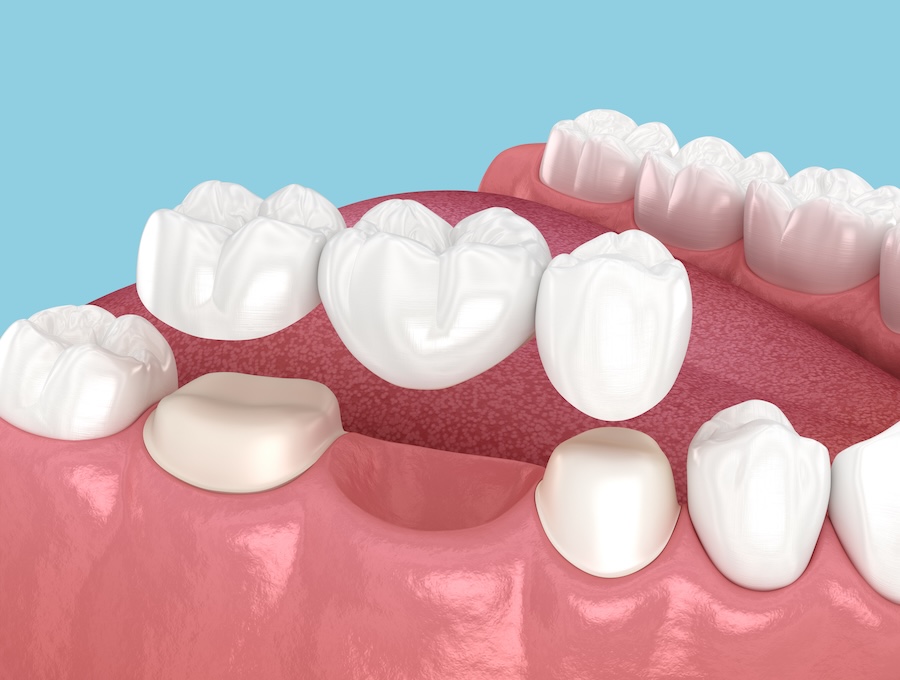
With a traditional bridge, crowns are placed on the teeth beside the gap, and a replacement tooth spans the space between them. Because those pieces are connected, ordinary floss cannot drop straight down between them the way it does between separate teeth. Food and plaque can still collect along the gumline and under the replacement tooth.
Plaque can also settle around the edges where the bridge meets the natural teeth underneath. Those teeth can still develop decay beneath the crowns, especially if buildup keeps collecting near the margins. Cleaning the visible parts of the bridge is only part of the job.
The exact shape of the bridge can change how you reach underneath it. Dr. Kuiper or our hygienist can show you where the floss should pass and which direction is easiest to thread from. Sometimes finding the right entry point is half the battle.
Getting Floss Beneath the Replacement Tooth
A floss threader can help guide floss beneath a bridge. It works a lot like threading a needle: the floss goes through the loop, the firm end passes under the replacement tooth, and then you pull the floss through. From there, you can slide it gently along the underside of the bridge and around the crowned teeth on either side.
You can also use floss with a stiffened end made for bridges and other dental work. Some people find that much easier than juggling a separate threader every night. If one method has you staring at the floss in frustration after five minutes, ask us to show you another option.
Once the floss is underneath, use a gentle back-and-forth motion. Avoid snapping it into the gums or yanking it through tight spaces. If you want, bring your flossing tool to an appointment and we can show you exactly how to position it around your bridge.
Can a Water Flosser Help?
A water flosser can be a good addition if food tends to collect under the replacement tooth. The stream can help flush out areas that are awkward to reach with a toothbrush. For some patients, it is also easier to use consistently than threading floss under the bridge every single night.
You may still need floss or another cleaning tool around the teeth beside the bridge. The best combination depends on how your bridge is shaped and where we see buildup. If you already use a water flosser, tell us which tip and setting you use so we can help you aim it more effectively.
Start at a comfortable pressure instead of cranking it all the way up. A stronger stream does not automatically clean better, and irritated gums are not the goal. You want enough pressure to flush the area without making the tissue sore.
Keep Brushing Around the Teeth at Each End
Brush your bridge and nearby teeth twice a day with fluoride toothpaste. Angle the bristles toward the gumline so they can clean around the edges of the crowns, then brush the chewing and outer surfaces as you normally would. A soft-bristled brush works well around both the bridge and the gums.
Pay a little extra attention to the teeth at either end of the bridge. If one starts feeling sensitive, food begins catching there, or your bite feels different, let us know. Dr. Kuiper can check the tooth, the gumline, and the bridge itself to see what changed.
Regular visits also give us a chance to look at the areas you cannot see easily at home. We can check the bridge margins, look underneath the replacement tooth, and see whether plaque keeps settling in the same spot. If it does, we can help you tweak the way you are cleaning it.
What If Floss Suddenly Stops Sliding Through?
Once you have cleaned under a bridge for a while, you get used to how the floss moves through. If it suddenly starts shredding, catching, or refusing to pass through an area that used to be easy, mention it. That can happen if there is a rough edge, buildup, or another change around the restoration.
The same goes for bleeding, soreness, or a bad taste that keeps coming from the same area. Food can get trapped underneath a bridge and irritate the gums, even when the bridge looks fine from the outside. The teeth under those crowns can also develop problems that are not obvious in the mirror.
If something feels different, we can take a closer look rather than having you keep working around it at home. Sometimes the fix is as simple as changing the cleaning method. Other times, the bridge or one of the crowned teeth needs attention.
Dental Bridge Care at Edgewood Family Dentistry in Anderson, IN
Cleaning under a bridge takes one extra step, but once you find the tool and technique that work for you, it usually becomes part of the routine. The goal is to keep food and plaque from sitting under the replacement tooth or around the teeth anchoring the bridge.
At Edgewood Family Dentistry in Anderson, Dr. Mallory Kuiper and our team can show you where to thread the floss, help you choose a water flosser or bridge-cleaning tool, and check how the bridge is holding up over time. If your bridge has become harder to clean, food keeps getting stuck underneath it, or something simply feels different, schedule a visit and bring your cleaning tools with you. We’ll help you get the routine working more smoothly!
Categorised in: Dental Bridges