
What to Expect During an Oral Cancer Screening at Your Dental Checkup
June 23, 2026 9:00 amA dental checkup is not only about cavities, gum health, and whether you have been flossing as often as you planned to. Your dentist is also looking at the soft tissues in and around your mouth, including your lips, cheeks, tongue, gums, throat, and jaw area.
That part of the visit is called an oral cancer screening. It usually fits right into the regular exam, so it may not feel like a separate event. Still, it gives your dentist a chance to look at places that are hard to see on your own, especially under the tongue, near the back of the mouth, and along the sides of the tongue.
At Edgewood Family Dentistry in Anderson, IN, Dr. Mallory Kuiper includes this kind of screening as part of a complete dental exam. She is looking for changes that may need another look, then deciding whether the area can be watched, photographed, checked again, or referred for further evaluation.
An Oral Cancer Screening Looks Beyond Your Teeth
Most people expect a dentist to check for plaque, gum irritation, cracked teeth, and cavities. However, a complete dental exam also includes the tissues around the teeth.
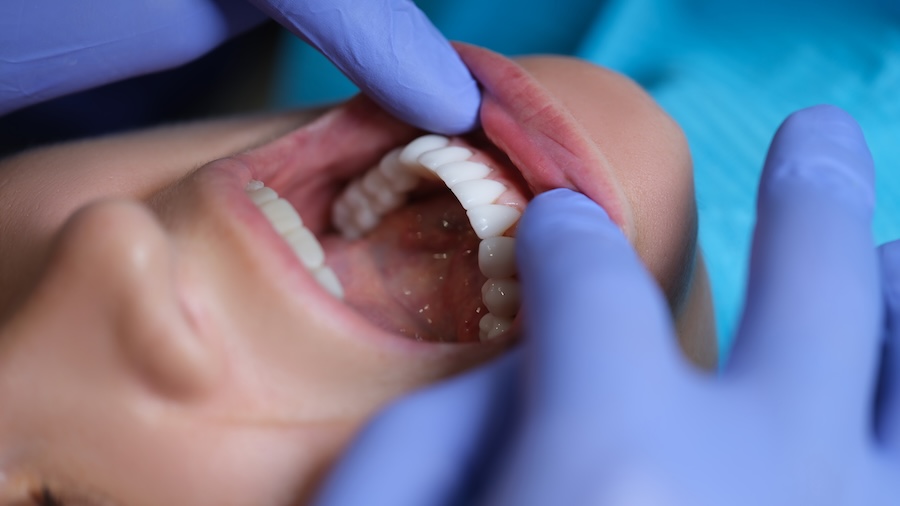
During an oral cancer screening, Dr. Kuiper may look at the inside of your cheeks, the roof of your mouth, the floor of your mouth, your gums, lips, tongue, and throat area. She may also gently feel around your jaw, under your chin, and along your neck.
A sore spot can show up for plenty of everyday reasons. You may have bitten your cheek while eating. A sharp tooth edge may be rubbing against your tongue. A denture, retainer, or appliance may be pressing in one place more than it should. Still, if an area hangs around, keeps returning, or looks different from the tissue around it, it is worth checking instead of hoping it fades on its own.
The screening itself is usually simple. It is part of looking at the whole mouth, not just the teeth you can see when you smile.
What Dr. Kuiper May Look for During the Exam
During the screening, Dr. Kuiper is looking for anything that seems unusual or out of place.
That can include white patches, red patches, sores that have not healed, thickened tissue, lumps, areas that bleed easily, or spots that feel firmer than the tissue around them. She may also notice changes in shape, texture, or color.
Some changes are easy to miss because they do not hurt. A spot can sit under the tongue, along the side of the mouth, or near the back of the throat without getting your attention. You may feel completely normal while it is there.
That is one reason routine exams help. You probably look at your front teeth often enough. However, most people are not checking the underside of their tongue or the floor of their mouth in the mirror before bed.
The Exam May Include Your Jaw and Neck
An oral cancer screening is not always only a visual exam. Dr. Kuiper may also feel along your jawline, under your chin, and around your neck.
This helps her check for tenderness, swelling, or lumps that may need more attention. Most of the time, there is nothing unusual. Even so, looking inside the mouth and checking the nearby areas gives a fuller picture.
You may be asked to turn your head slightly, open wide, or move your tongue from side to side. It can feel a little awkward for a few seconds, but the process is usually quick.
If something feels sore when she touches it, say so. That detail may help connect the area to a recent injury, teeth grinding, a rough tooth edge, a bite issue, or another cause.
Your Tongue Gets a Closer Look
The tongue is one of the main areas checked during an oral cancer screening. That includes the top, sides, and underside.
Dr. Kuiper may ask you to stick out your tongue, move it from side to side, or lift it toward the roof of your mouth. Those movements make it easier to see areas that are normally hidden.
The sides and underside of the tongue can be irritated by sharp teeth, rough fillings, broken restorations, or a habit of biting the tongue or cheek. So, when there is a sore area, the first question may be whether something nearby is rubbing against it.
However, if the spot has been there for a while or does not look like a typical irritation, Dr. Kuiper may want to document it with an intraoral image, have you return in about two weeks, or refer you for further evaluation.
Bring Up Changes You Have Noticed
Dental visits are a good time to mention anything that has felt different, even if you are not sure whether it is important.
Maybe you have had a sore in the same spot for a few weeks. Maybe swallowing feels different, or your throat has felt scratchy longer than usual. You may have noticed numbness, a rough patch, hoarseness, a lump, or a place that bleeds when you brush.
You do not need to arrive with a theory. Just tell Dr. Kuiper what you have noticed and how long it has been going on. Details such as “it has been there for three weeks” or “it only hurts when I eat something spicy” give more information than “my mouth feels weird.”
Dry mouth is also worth bringing up. It can be tied to medications, mouth breathing, dehydration, health conditions, and other causes. While dry mouth does not automatically point to a serious issue, it can leave the tissues feeling irritated and can change how your mouth feels day to day.
Many Mouth Sores Have an Everyday Cause
Not every sore, patch, or rough area points to something major. Mouth tissues get irritated fairly easily.
You may have bitten your cheek during dinner. A rough edge on a tooth may have been scraping your tongue. A new denture or retainer may be rubbing in one spot. Even a hot bite of pizza can leave the roof of your mouth sore for a few days.
Because of that, Dr. Kuiper looks at the bigger picture. She may consider where the spot is, how long it has been there, whether it hurts, what it looks like, and whether there is an obvious source of irritation nearby.
Sometimes the solution is simple, such as smoothing a rough tooth edge and giving the area time to heal. Other times, the area needs to be watched more closely instead of written off as irritation.
What Happens If a Spot Needs a Closer Look?
If Dr. Kuiper sees a spot that she wants to keep an eye on, she may ask a few more questions. She may want to know when you first noticed it, whether it has changed, whether it hurts, and whether you use tobacco products or drink alcohol regularly.
Often, the next step is to take an intraoral image. That gives the office a clear photo of the area at that visit, which makes it easier to compare later. It also saves you from trying to remember whether a patch looked smaller, redder, or more noticeable two weeks ago.
In many cases, you may be asked to return in about two weeks. That window gives a minor injury or irritation time to heal. Then, when you come back, Dr. Kuiper can see whether the area has improved, stayed the same, or changed.
If the spot is still there or looks more concerning, she may recommend a referral to an oral surgeon, physician, or another specialist. A biopsy may be part of that next step. A biopsy involves taking a small tissue sample so it can be examined more closely. It is how a specialist gets a clearer answer when looking at the area alone is not enough.
Tobacco, Alcohol, and Sun Exposure Can Affect the Mouth
Dentists often ask about tobacco and alcohol because both can affect oral tissues.
Smoking and smokeless tobacco can irritate the mouth and raise the risk of oral health problems. Heavy alcohol use can also play a role. When tobacco and alcohol are used together, the risk can be higher.
Sun exposure can affect the lips as well. If you spend a lot of time outside, lip balm with SPF is a practical habit, especially if your lips burn, peel, or stay chapped for long periods.
However, oral cancer screenings are not only for people who smoke or drink. Changes in the mouth can happen in people without obvious risk factors, which is why this part of the dental exam is useful for everyone.
Regular Checkups Help Catch Changes Over Time
Your mouth changes as the years go by. Teeth can wear down, gums can become irritated or recede, and small sore spots may come and go. Because of that, regular visits give Dr. Kuiper a chance to notice when something looks new, has changed, or has not healed as expected.
That history can help shape the next step. A spot that looked the same at several visits may be handled differently from one that appeared recently or changed quickly. Photos and notes from earlier appointments can also make the comparison more useful.
Regular dental checkups also give you a place to bring up small concerns before they have been hanging around for months. You may not want to schedule a separate visit for one rough spot or a sore area that comes and goes. Still, it is worth mentioning when you are already in the chair.
Oral Cancer Screening at Edgewood Family Dentistry in Anderson, IN
An oral cancer screening is a quick part of a regular dental checkup, but it allows Dr. Mallory Kuiper to look beyond your teeth and gums. She can check the soft tissues in your mouth, ask about changes you have noticed, and document any area that needs a closer look.
At Edgewood Family Dentistry in Anderson, IN, a worry spot may be photographed with an intraoral image and checked again in about two weeks. If it does not heal or looks different at the recheck, Dr. Kuiper may recommend a referral or biopsy to get a clearer answer. Call to schedule a dental checkup, especially if you have a sore that will not heal, a rough patch, a lump, numbness, or another change that has been sticking around.
FAQs
Does an oral cancer screening hurt?
No. The screening is usually quick and gentle. Your dentist may look closely inside your mouth and lightly feel around your jaw and neck, but it should not be painful.
How long does an oral cancer screening take?
It often takes only a few minutes during a regular dental checkup. In many cases, it is done as part of the normal exam.
What does a dentist look for during an oral cancer screening?
Your dentist may look for sores that do not heal, red or white patches, lumps, thickened areas, unusual bleeding, or changes in the tongue, lips, cheeks, gums, or throat.
What happens if my dentist finds a spot?
Your dentist may take an intraoral image and ask you to return in about two weeks. If the area does not improve or looks concerning, you may be referred for further evaluation or a biopsy.
Should I mention a mouth sore if it does not hurt?
Yes. A sore does not need to be painful to deserve a closer look, especially if it has been there for more than a couple of weeks.
Can a dentist diagnose oral cancer during a checkup?
A dentist can identify areas that need more evaluation. A diagnosis may require a specialist and, in some cases, a biopsy.
Do people who do not smoke need oral cancer screenings?
Yes. Tobacco use can raise risk, but mouth changes can also happen in people who do not smoke or drink.
Categorised in: Oral Cancer Screening