Porcelain Veneers in Anderson: When They’re Used for Chips, Gaps, or Discoloration
July 15, 2026 9:00 amA chipped front tooth, a small gap, or one darker tooth can change the way an entire smile looks, even when the rest of the teeth are healthy. These concerns may be small in size, but they usually sit in the most visible part of the mouth, which makes them hard to ignore in photos, conversation, or the bathroom mirror.
Porcelain veneers may be used to reshape or cover those areas, especially when the concern involves the front surface of the tooth. They can add length to a chipped edge, close a narrow space, or mask discoloration that whitening has not improved. However, the best treatment still depends on the condition of the tooth underneath and how much change is actually needed.
At Edgewood Family Dentistry in Anderson, IN, Dr. Mallory Kuiper can examine the teeth and explain whether porcelain veneers fit the concern or whether bonding, whitening, orthodontic treatment, or a crown would be a better match. The aim is to improve the part that bothers you without doing more treatment than the tooth requires.
What a Porcelain Veneer Changes
A porcelain veneer is a thin restoration bonded to the front of a tooth. It changes the part that shows when you smile, while leaving much of the natural tooth in place. Depending on the concern, a veneer can adjust color, width, length, contour, or several of those details together.
Porcelain is often chosen because it can reflect light in a way that resembles natural enamel. It also resists staining better than composite resin, which helps the color remain more stable over time. The shade, texture, and shape are customized so the veneer blends with the teeth around it rather than looking like a separate piece.
Veneers are usually considered when the tooth is healthy enough to keep but needs a visible cosmetic change. A tooth with a deep crack, extensive decay, or a large filling may need more support than a veneer can provide. In that situation, a crown may protect the tooth more effectively.
When a Chipped Tooth May Be a Good Fit for a Veneer
A small chip along the edge of a front tooth can leave the smile looking uneven, even when the tooth does not hurt. It may also create a rough spot that catches the tongue or continues to wear over time. Porcelain veneers can rebuild that edge and restore a smoother shape.
Before choosing a veneer, Dr. Kuiper will want to know how the chip happened. A tooth damaged in a one-time accident presents a different situation from a tooth that keeps chipping because of grinding, clenching, nail biting, or an uneven bite. If the pressure remains, the veneer may be exposed to the same strain that damaged the enamel.
The size of the chip also affects the recommendation. A very small chip may be repaired with dental bonding, which often requires little or no enamel removal. A larger chip, or several teeth with uneven wear, may be better suited to porcelain when a stronger and more color-stable result is preferred.
Worn Front Teeth Need a Closer Look at the Bite
Front teeth can gradually become shorter from years of grinding or heavy tooth contact. The edges may look flatter, thinner, or uneven from one side of the smile to the other. Veneers can restore some of the lost length, but the bite has to be studied before that length is added back.
The lower teeth need enough room to move without striking the veneers too heavily. Dr. Kuiper may check the bite while the jaw closes and while it moves from side to side, since those movements can reveal pressure points that are not obvious when the teeth are viewed from the front.
For patients who grind or clench, a nightguard may become part of the plan. The guard can reduce repeated pressure during sleep and help protect both the veneers and the natural teeth. Without that protection, the same wear pattern may begin again.
When Veneers Can Close a Small Gap
A small gap between front teeth can sometimes be closed by adding a little width to the teeth on either side. This can work well when the space is narrow and the teeth are already in a stable position. The finished teeth should still look proportional to their length and to the rest of the smile.
When the space is larger, closing it with porcelain alone may require making the teeth noticeably wider. Orthodontic treatment may create a more natural result by moving the teeth closer together before any reshaping is considered.
Tooth size, missing teeth, gum attachment, bite patterns, and tongue habits can all contribute to spacing. Looking at those details helps determine whether veneers are likely to remain a comfortable fit over time or whether movement of the teeth should come first.
Uneven Tooth Shape Can Be Refined
Some teeth naturally develop smaller, narrower, shorter, or more pointed than the teeth beside them. A single tooth may look out of proportion, while several front teeth may create an uneven line across the smile. Porcelain veneers can add shape where it is missing and bring those teeth into better balance.
They may be considered for peg-shaped teeth, uneven edges, mild asymmetry, or a tooth that never developed to the same size as its neighbors. The change can be subtle or more noticeable, depending on what the patient wants and what the surrounding teeth allow.
The goal is not to make every tooth identical. Natural teeth have small differences in contour, texture, and translucency, and those details help a smile feel believable. A well-planned veneer should fit the person’s face, lips, gumline, and neighboring teeth rather than follow a standard shape.
Discoloration That Whitening Does Not Fully Improve
Professional whitening works well for many common stains, including those linked to coffee, tea, tobacco, red wine, and natural aging. However, some color changes begin deeper inside the tooth and do not respond evenly. A tooth that was injured years ago may develop a gray cast, while white enamel spots or internal staining may remain visible after whitening.
Porcelain veneers can cover those differences and create a more even shade across the smile. When only a few teeth will receive veneers, the surrounding natural teeth may be whitened first so the porcelain can be matched to the brighter shade.
Porcelain will not lighten later with whitening products. Therefore, whitening the natural teeth afterward could leave those teeth brighter than the veneers beside them.
A darker tooth may also require a porcelain material that softens the underlying gray or brown tone without making the restoration look overly opaque. The porcelain needs to hide enough of the darker shade while still carrying some of the depth and light reflection seen in natural enamel.
Can Veneers Make Slightly Crooked Teeth Look Straighter?
Veneers can sometimes improve the appearance of mild rotation or unevenness. A tooth that sits slightly behind its neighbor may be reshaped so the visible surface lines up more smoothly. This can work when the position difference is small and the tooth has enough healthy structure for conservative preparation.
However, veneers do not move the tooth or its root. When several teeth are crowded, or one tooth sits too far forward, orthodontic treatment may preserve more enamel and create better spacing. Trying to disguise significant crowding with porcelain can require more tooth reduction and may leave the teeth looking too thick.
Some patients benefit from combining treatments. Clear aligners may move the teeth first, while one or two veneers refine the final shape or color. The process takes longer, but it often produces a more balanced result because each treatment is handling a different part of the concern.
Healthy Teeth and Gums Need to Come First
Veneers depend on a healthy foundation. Cavities, cracks, active gum disease, and significant inflammation should be treated before cosmetic work begins. Covering the front of a tooth does not stop decay or gum disease from continuing underneath or around it.
The gums deserve particular attention because the edge of a veneer sits close to the gumline. Swollen or bleeding tissue can change the way the tooth is measured and may settle into a different shape after treatment. Waiting until the gums are healthy gives Dr. Kuiper a more accurate view of where the veneer should end.
A cleaning, filling, or gum treatment may be recommended first. Once the tissue is stable, the final shape can be planned more precisely and the veneer margins will be easier to keep clean. That preparation can have a noticeable effect on both appearance and long-term comfort.
Enamel and Tooth Preparation
Traditional porcelain veneers usually require removal of a small amount of tooth structure so the restorations can fit without making the teeth look bulky. Whenever possible, the dentist preserves a strong enamel surface because veneers generally bond more predictably there.
The amount of preparation varies from one tooth to another. A tooth that sits slightly behind the others may need very little reduction, while a tooth that projects forward may need more room created before the veneer can sit naturally.
Because the removed tooth structure does not grow back, traditional veneer treatment is considered irreversible. Patients should understand how much preparation is expected before moving forward, especially when several teeth are being treated.
Teeth with large fillings, deep cracks, significant wear, or limited remaining enamel may need another type of restoration. In those cases, a crown may offer better coverage and support.
The Bite Has to Support the Veneers
The dentist also needs to see where the lower teeth contact the veneers during biting, speaking, and side-to-side jaw movement. A deep bite, edge-to-edge bite, heavy clenching, or nighttime grinding can place added pressure along the edges of the restorations.
Dr. Kuiper may examine the bite while the teeth close normally and while the jaw moves. This can reveal whether added length would create heavy contact or whether one veneer might receive more force than the others.
Some concerns can be managed with a nightguard or a small adjustment. Others may call for orthodontic treatment before veneers are placed. The finished teeth should look natural while still feeling comfortable during everyday use.
Who May Be a Good Candidate for Porcelain Veneers?
A good candidate usually has healthy teeth and gums, enough enamel for bonding, and a concern that can be improved without removing too much natural tooth structure. Porcelain veneers may be considered for small chips, worn edges, narrow gaps, deep discoloration, uneven tooth size, mild asymmetry, or slight rotation.
The bite should also be stable enough to support the restorations. Grinding or clenching does not always rule treatment out, but it may need to be managed first. In some cases, a nightguard becomes an important part of keeping the veneers in good condition.
Patients should also be comfortable with the long-term commitment. Veneers can last for many years, but they do not last forever, and the prepared teeth will continue to need coverage in the future. Knowing that before treatment helps patients make a more informed decision.
When Another Treatment May Be a Better Match
A small chip may respond well to dental bonding with little or no enamel removal. Professional whitening may be enough when the concern is limited to surface color, while orthodontic treatment may work better for wider gaps, crowding, or teeth that sit too far out of position.
A crown may be more appropriate when a tooth is heavily filled, badly fractured, or weakened. In some cases, combining treatments produces a better result than asking veneers to handle every part of the smile.
During the consultation, Dr. Kuiper can compare those options and explain how each one would affect the tooth. That gives patients a clearer sense of how much treatment is involved and what kind of result each approach can reasonably provide.
What the Veneer Process Usually Involves
Treatment begins with an examination and a discussion about what the patient would like to change. Photos, digital scans, or impressions may be used to study the teeth, gums, smile, and bite. Dr. Kuiper may also discuss whether whitening or orthodontic treatment should happen first.
In some cases, a mock-up or preview can show how proposed changes in shape or length may look. This gives the patient something more concrete to react to before the teeth are prepared. A preview can also help identify when a tooth looks too long, too square, or simply unlike the rest of the smile.
If porcelain veneers are chosen, the teeth are prepared and scanned or impressed. Temporary veneers may be placed while the final restorations are made, which gives the patient time to get used to the new length and shape. The temporary stage can also reveal small changes that should be made before the final porcelain is completed.
At the placement visit, Dr. Kuiper checks the shade, contour, fit, and bite before bonding the veneers in place. Small adjustments may be made so the teeth feel comfortable and blend with the rest of the smile. Before treatment begins, patients should know how many teeth will be treated, how much enamel will be removed, and what future maintenance may involve.
What Helps Porcelain Veneers Look Natural
Natural teeth are not one flat shade of white. They have subtle texture, translucency, and small differences in shape, especially near the edges. Porcelain can reproduce those details, but the design needs to fit the rest of the smile.
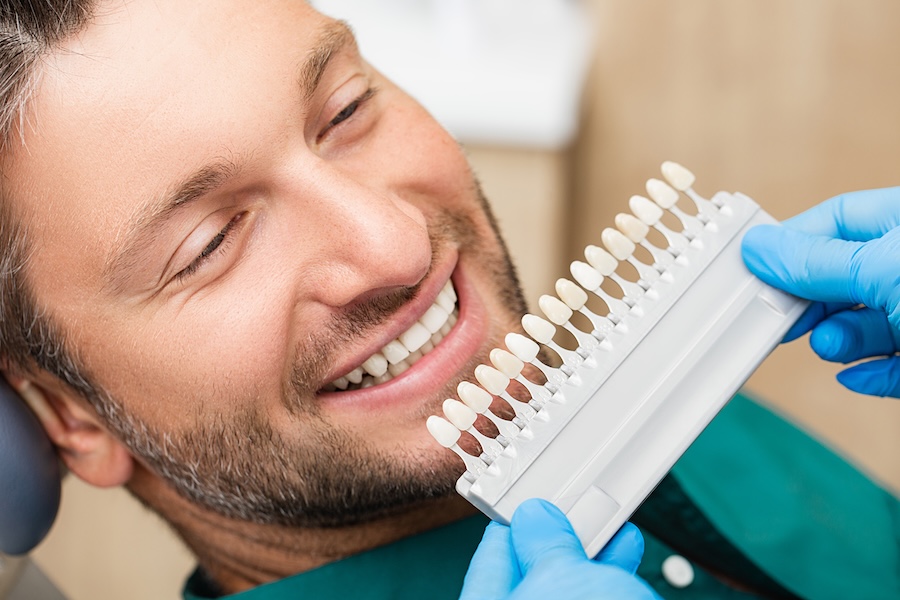
A veneer that looks attractive on a shade tab may look too bright once it is placed beside the lower teeth or viewed against the lips and skin tone. One veneer has to blend closely with several natural teeth, which can make a single-tooth case especially detailed.
Treating several teeth gives more control over color and symmetry, although the finished smile should still have some variation. Patients may prefer a polished, even result or a softer look that keeps more of their natural tooth character. Talking through that preference early helps guide the shape, surface texture, and shade of the porcelain.
Caring for Porcelain Veneers
Porcelain veneers need regular brushing, flossing, and dental visits. The porcelain surface cannot develop a cavity, but the natural tooth around it still can. Plaque can also collect near the gumline and cause inflammation if those edges are not cleaned well.
Patients should avoid using veneered teeth to open packages, bite fingernails, chew ice, or hold hard objects. These habits can chip porcelain in much the same way they can chip natural enamel. A nightguard may also be recommended for patients who grind or clench.
Coffee, tea, red wine, and tobacco may stain the natural teeth around the veneers, even though porcelain itself resists staining well. Regular visits allow the dental team to check the veneer margins, bite, gums, and surrounding teeth as the years pass.
Porcelain Veneers at Edgewood Family Dentistry in Anderson
Porcelain veneers can improve chipped edges, narrow gaps, stubborn discoloration, worn teeth, and uneven shapes. However, the strongest results come from matching the treatment to the condition of the teeth, the amount of healthy structure available, and the way the bite works.
At Edgewood Family Dentistry in Anderson, IN, Dr. Mallory Kuiper can examine the teeth and compare porcelain veneers with bonding, whitening, orthodontic treatment, or crowns. Patients can learn how much preparation may be needed, how the shade will be selected, and whether treating one tooth or several would create the most balanced result.
Schedule a cosmetic dentistry consultation with Edgewood Family Dentistry to learn whether porcelain veneers fit your smile and which other options may be worth considering.
Categorised in: Dental Veneers